Source customized metal led illuminated sign for hotels, bars, and schools
Compare 30 listings for customized metal led illuminated sign options featuring stainless steel construction and LED lighting. Buyers can evaluate waterproof designs, custom sizes, and installation methods for commercial and home applications.
Key considerations
Products List



Comprehensive Sourcing Guide
Strategic Sourcing Guide for Customized Metal LED Illuminated Signs
Understanding Product Variants and Core Specifications
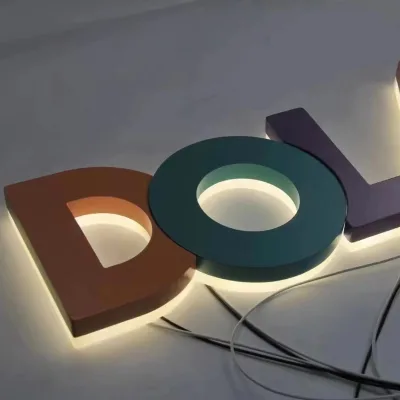
When sourcing customized metal LED illuminated signs, buyers must first navigate the distinct product categories available in the market. The core keyword encompasses a broad spectrum of items, ranging from fully luminous lettering to combined light box structures. Based on observed product data, the market offers specific models such as "Metal lettering 06," "Metal lettering 17," "backlit letter 310," and "marquee letters 239." These identifiers often correlate with specific design philosophies, such as "Luminous Letter" types which utilize internal lighting, versus "Unluminous Letter" types that may rely on external illumination or ambient light.
A critical technical distinction lies in the material composition. The majority of high-quality options in this category utilize Stainless Steel as the primary structural material. Some variations integrate Acrylic components, particularly in models designed for "Combined Light Box" structures or "Advertising Light Box" applications. The physical dimensions are rarely off-the-shelf; instead, the standard specification often points to "Customized Size" or specific dimensions like "60cm60cm8cm" and "50cm" depending on the model. Buyers should verify that the supplier can accommodate "Customized Color" and "Custom Designs" to ensure the signage aligns with brand identity. The structural integrity is further supported by features such as a "Frame, Faces, Support" configuration, which is essential for larger installations.
Technical Performance and Electrical Requirements
The electrical architecture of these signs is a primary consideration for both safety and longevity. The observed data indicates a prevalence of 24V systems, which are generally safer for commercial and residential installations compared to higher voltage direct mains connections. However, some product listings specify a more complex electrical profile, noting an "Input 12V" with an "Output 110-240V" capability. This suggests the inclusion of specific power supply units that adapt to regional voltage standards. The light source is consistently identified as LED, offering energy efficiency and a long operational life.
Installation methods vary significantly based on the product type and intended location. For wall-mounted applications, the "Wall Screw Fix" method is common, often utilizing "Back with Holes, Screws or Glue" for secure attachment. Other models support "Wall Mounting, Hanging, Standing," providing versatility for different architectural environments. A crucial technical attribute for outdoor installations is the "Waterproof" rating. Buyers must confirm that the specific unit they select meets the necessary ingress protection standards for the intended climate, as exposure to rain or humidity can compromise the LED drivers and metal casing if not properly sealed. The "Anti-wind Capability: Strong" feature noted in some listings indicates that the design accounts for structural stability in high-wind zones, a vital factor for outdoor signage.
Compliance, Certification, and Safety Standards
Navigating the regulatory landscape is essential for B2B procurement, particularly when signs are destined for international markets. The supply chain for these products frequently references specific certifications that validate safety and environmental compliance. "CE" certification is a prominent standard observed in the product data, indicating conformity with health, safety, and environmental protection standards for products sold within the European Economic Area. Additionally, "SAA" certification is noted, which is a critical safety standard for electrical products in Australia and New Zealand.
While "RoHS" is mentioned in background contexts, buyers should treat it as a verification point rather than an automatic guarantee. When evaluating a supplier, the procurement team must request current, valid certificates for the specific batch of goods. The "prod_standard" often lists dimensions or design norms, but the electrical safety standards are the non-negotiable elements. For projects in the United States, the inclusion of "Power Supply with Us/UK/EU/Au Plug" accessories suggests that the supplier provides region-specific adapters, but the underlying electrical safety of the driver must still be verified against local codes. Ensuring that the "High Quality" and "Long Durable" claims are backed by these certifications is the first step in mitigating liability risks.
Cost Drivers and Procurement Economics
The pricing structure for customized metal LED signs is influenced by several variable factors, primarily driven by the level of customization and material selection. The observed price range in the market spans from $4.3 to $500, a wide disparity that reflects the difference between small, simple lettering units and large, complex light box assemblies. The "Customized Size" and "Customized Color" options are significant cost drivers; a standard rectangular shape will typically be more economical than a bespoke design requiring unique tooling or fabrication.
Minimum Order Quantity (MOQ) is another critical economic factor. The data shows an MOQ range of 1 to 100 pieces, with many suppliers offering a low entry barrier of "1 Piece" or "1PC." This flexibility allows small businesses to test the market or order single units for pilot projects. However, larger orders may unlock better pricing tiers. The "Lead Time" is another variable, with observed ranges of "4-7 Working Days Depend on Quantity." Buyers must account for this variability in their project timelines. If the order requires "Custom Designs" or specific "Stainless Steel" finishes, the lead time may extend beyond the standard window. Additionally, packaging costs can impact the final landed price; options include "Wooden Box," "Carton," or a combination of "Carton/Wooden Box Depending on The Size," with wooden packaging generally being more expensive but offering superior protection for delicate metal components.
Typical Applications and Usage Scenarios
The versatility of customized metal LED illuminated signs makes them suitable for a diverse array of commercial and residential applications. The "Usage" attributes observed in the product data include "Landscaping," "Commercial," "Home," and "Festival" settings. This broad applicability suggests that these signs are not limited to storefronts but can enhance interior decor or outdoor event spaces. Specific application sectors identified include "Hotel, Company, School, Bar," indicating that the signage is often used for branding, wayfinding, or aesthetic enhancement in high-traffic areas.
For outdoor environments, the "Waterproof" and "Anti-wind Capability" features are paramount. Signs intended for "Outdoor" use must withstand environmental stressors, making the "Stainless Steel" material a preferred choice for its corrosion resistance. In contrast, indoor applications in "Home" or "Festival" settings might prioritize "Custom Designs" and "Customized Color" to match specific themes or interior design palettes. The "Advertising" and "Decoration" usage tags highlight the dual function of these products: they serve as functional advertising tools while acting as decorative architectural elements. The "Rectangle" shape is common, but the ability to create "Custom Designs" allows for unique branding opportunities that standard shapes cannot achieve.
Supplier Evaluation and Quality Assurance
Selecting the right supplier requires a rigorous evaluation process that goes beyond the initial product listing. Buyers should verify the "prod_origin" of the goods, with "Hefei, China" and "Anhui, China" being noted locations of manufacture. While these regions are known for manufacturing capabilities, the specific factory's quality control processes are what matter most. A key indicator of supplier reliability is the provision of a "Warranty," with "2 Years" being a standard offering in the observed data. This warranty period signals the manufacturer's confidence in the durability of their "Long Durable" products.
Quality control should focus on the integrity of the "Installation" components and the finish of the metal. Buyers must inspect samples for the quality of the "Wall Screw Fix" or "Back with Holes" mechanisms to ensure they can support the weight of the sign without failure. The "Structure" comprising the "Frame, Faces, Support" must be robust enough to prevent warping or damage during shipping and installation. Furthermore, the "Product" description often mentions "High Quality," but this is a claim that must be validated through sample testing. Buyers should request evidence of the "Light Source" consistency and the "Waterproof" sealing effectiveness before committing to a large order. The "Customization" availability is a positive sign of a flexible supplier, but it also introduces complexity; the supplier must demonstrate a proven track record of executing custom orders without compromising on the "Standard" specifications.
Long-Term Procurement and Maintenance Considerations
Sourcing customized metal LED signs is not merely a transactional purchase but an investment in long-term brand visibility. The "Warranty" period of 2 years provides a baseline for expected performance, but buyers should plan for maintenance beyond this window. The "LED" light source is generally long-lasting, but the power supply and driver units may require replacement over time. Ensuring that the supplier can provide compatible replacement parts or "Accessories" like power supplies with specific plugs is crucial for long-term viability.
The "Packaging" method also plays a role in long-term preservation. "Wooden Box" packaging offers better protection against moisture and physical damage during transit compared to standard cartons, which is vital for preserving the finish of "Stainless Steel" and "Acrylic" components. Buyers should also consider the scalability of their procurement strategy. If a project requires "Customized Size" or "Custom Designs" for multiple locations, the supplier's ability to maintain consistency across batches is essential. The "Lead Time" variability based on quantity means that future expansion plans should be communicated early to avoid delays. Finally, the "Usage" context should be reviewed periodically; a sign designed for "Landscaping" may require different maintenance protocols than one used for "Commercial" advertising, and the supplier should be able to provide guidance on these specific care requirements.
FAQs
What certifications are available for these signs?
Some products carry SAA and CE certifications for safety compliance. Buyers should verify specific batch certificates before purchase to ensure the electrical components meet regional standards for Australia, New Zealand, or Europe.
How are these signs installed on walls?
Installation typically uses wall screw fixes with back holes, screws, or glue. Some models also support hanging or standing configurations, allowing flexibility for different architectural environments and mounting surfaces.
Can I order custom sizes and colors?
Yes, customization is available for size, color, and design to match brand identity. Specific models may have standard dimensions like 60cm or 50cm, but bespoke options allow for unique shapes and finishes.
What is the minimum order quantity for these signs?
The minimum order quantity can be as low as one piece for many suppliers. This low entry barrier allows small businesses to test the market or order single units for pilot projects without large commitments.
Are these signs suitable for outdoor use?
Yes, many models are waterproof and feature strong anti-wind capabilities for outdoor environments. Stainless steel materials provide corrosion resistance, making them durable for landscaping, commercial, and festival applications exposed to weather.
What is the typical lead time for production?
Lead times generally range from 4 to 7 working days depending on the order quantity. Custom designs or specific material requirements may extend this window, so early communication with the supplier is recommended.